
Reflecting on your career, what first drew you to local government and what kept you there?
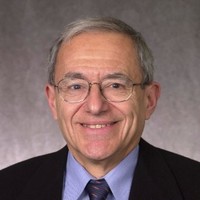 I did not know what a city manager was until I was appointed community relations director for the city of Santa Barbara. That first local government job focused on community needs and gave me an opportunity to work on social services, housing and communication with residents. It reflected my interests and life experiences up to that point, including serving as a Peace Corps volunteer, attending a Franciscan seminary and tutoring during graduate school.
The work also aligned with my graduate studies at the University of Pittsburgh, where I pursued a Master of Public and International Affairs with a focus on economic and social development.
Which project or initiative are you the most proud of from your time as a city manager?
I am most proud of the opportunity to assemble a management team committed to working with the Salinas city council to develop policies and programs that identified and actively responded to community needs. Our overall theme was “Community Oriented Public Services.” It guided us in both good and difficult times, including when we lacked the financial resources to pursue our objectives.
There were also the usual facilities projects, including a new main library in Oxnard and a new city golf course in Salinas.
What did you find most fulfilling about the role of city manager? How did it evolve over time?
The most fulfilling part was having an impact on residents’ quality of life. That work became more meaningful as I learned to appreciate the role of elected officials and work in partnership with the mayor and city councilmembers. Over time, I developed a better understanding of their goals and aspirations for the community. I also learned how to build a partnership within the city organization so employees could work together to achieve the goals of elected leadership.
What leadership qualities do you believe were most critical to your success as a city manager?
Listening to understand, rather than just hearing, was critical. So was having the patience to develop long-term strategies and encourage cooperation in carrying them out.
It was also important to assemble a professionally qualified staff team committed to the organization’s goals. That meant identifying talent within the organization, promoting from within and hiring from outside to build the team.
How did you manage work-life balance as a city manager?
Not very well at first. As a department head in my first local government position, I could leave work at the office fairly easily. The demands involved a limited number of issues and programs, with limited interaction with elected officials.
As a city manager, responsibility for the entire organization and constant interaction with elected officials and key staff were things I learned on the job. It took experience to appreciate the need for better time management, clear priorities and delegation. Those first months of learning took considerable time away from family and other personal priorities.
Eventually, I became better at managing my time, protected family time and found activities outside work that gave me priorities beyond the city.
Maintaining my health was critical. I made a point of jogging, biking, hiking and going to the gym, although the intensity and pace of those activities diminished as I grew older.
How did you engage with residents of the cities you served? Were there any memorable experiences?
To a large extent, reluctantly. My view was, and still is, that the mayor and city council are the community’s primary representatives. Any engagement by the city manager should be in deference to and in cooperation with those elected representatives.
Throughout my career, I made a point of being available in the office to residents who wanted to meet and discuss city issues. Looking back on my years as a city manager, from 1980 to 2008, I recognize that I worked in an environment very different from today’s. Email was not the norm; people wrote letters. There was time to respond, rather than a demand for immediate action except in real emergencies.
Public presentations were conversational and rarely confrontational. Throughout my career, a daily local newspaper covered local government activities and provided a reliable way to share information across the community. People subscribed and read it. That resource is unfortunately in the past. One lesson remains: Identify and use a credible source with a broad reach to communicate with residents.
What were some of the most significant challenges you faced as a city manager in California?
Financial challenges were a regular occurrence and were worsened almost constantly by state government actions.
Other challenges included collaborating with elected officials to set priorities and develop work programs to achieve them, as well as responding to community demands for programs and services.
What emerging trends or challenges do you think current and future city managers should be prepared for?
City managers need to be prepared for an increasingly demanding online environment.
They also need to build understanding among elected officials, residents and employees about the limits of what a city or county can achieve. The need to produce affordable housing is a good example.
It is also important to support and mentor the next generation of local government managers, rather than simply instruct them.
Looking back, what do you wish you had known when you first became a city manager?
I wish I had better understood how, why and when elected officials can work cooperatively and respectfully with one another. Unfortunately, that understanding comes from collaborating with them every day.
In my first city manager position, I also wish I had better understood and accepted that the city manager is not in charge. The role depends on staff, cooperation with elected officials and a solid understanding of the community’s expectations, needs and aspirations. By my second and third city manager positions, I had learned those lessons.
What advice would you give to someone entering the city management profession today?
Enter the profession with a focus on the community and a commitment to accepting the leadership role of elected officials. That advice is not new.
What are some accomplishments from retirement you’re most proud of?
I was fortunate to be recruited and appointed as ICMA’s West Coast regional director after retiring from Salinas. I served in that role for almost three years, which gave me the opportunity to work with, support and advocate for MMASC and MMANC. I consider these two organizations the most important for the local government profession in California.
The regional director role also allowed me to stay engaged with California city managers and chief administrative officers, which made the transition from the profession easier.
As senior advisor for the Monterey Bay Area Managers group, I have also maintained contact with and supported city managers, chief administrative officers, assistants and deputies.
I have also had meaningful opportunities to support community activities through United Way, church initiatives serving people experiencing homelessness, student mentoring programs and volunteer church leadership roles.
