
What inspired you to enter city management?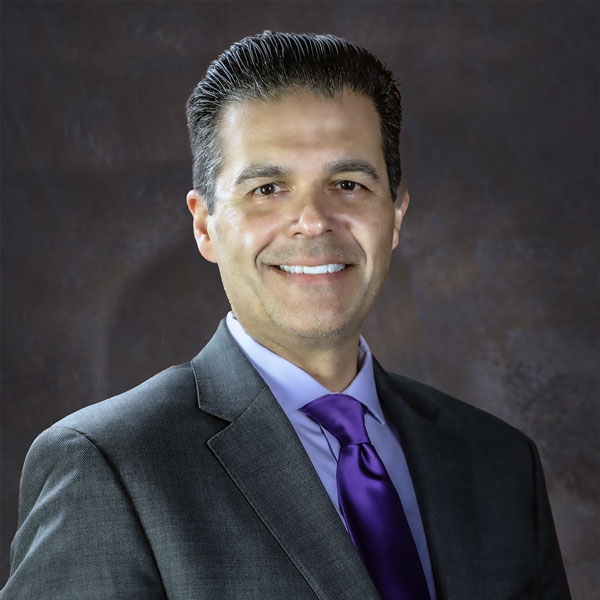
My inspiration came from my time at the Western Riverside Council of Governments (WRCOG), where I served as chief financial officer from 2011 to 2018. WRCOG works with a wide range of agencies, including cities, special districts and the county of Riverside. That gave me a front-row view of many different leadership roles, and I saw how each one made a positive difference for its agency and the people it served.
I did not grow up with personal ties to public service. Experience and observation turned out to be my best teachers. Watching capable managers solve problems and move their communities forward makes me want to do the same. I am also grateful for the strong family behind me. My wife, Dolores, and my two sons, Adrian and Andrew, have supported me at every step, and none of this would be possible without them.
How did you become a city manager?
My path started in finance. I began my career in accounting and audit, then served as CFO at WRCOG and as finance director/city treasurer for the city of Eastvale. In 2019, I joined the city of Perris as director of finance and was promoted to deputy city manager in the summer of 2021 and then to assistant city manager in 2024.
Perris is where I honed my skills as an executive. I learned from talented colleagues, including City Manager Clara Miramontes. My portfolio covered finance, public works, information technology, code enforcement and animal control, along with managing the city’s public safety contracts with the Riverside County Sheriff and Fire. That breadth prepared me to oversee an entire organization.
In June 2026, I saw the city of Hemet’s recruitment for city manager. The skill set they were looking for matched my experience, and I knew it was the right time to make the leap. I began serving as Hemet’s city manager in November 2026.
What do you enjoy most about your role?
What I enjoy most is making a difference. Part of that is watching staff grow. Mentoring employees and seeing them take on new responsibilities is one of the most rewarding parts of the job.
The other part is seeing the community gain the opportunities it has been asking for. That might be new retail that residents have wanted for years, or improved public safety tools that make the city a safer place to live. Those results are what make the long days worthwhile.
What role does a city manager play in local government, and how does it differ from that of a council member or mayor?
The city council sets policy, and the city manager and staff carry it out. When I was earning my Master of Public Administration, this was described as the politics-administration dichotomy. Politics is the “what,” and administration is the “how.”
The mayor and council members are elected to represent the community and decide its direction. The city manager’s job is to give them sound, objective information to make those decisions and then to implement them effectively and efficiently. Respecting that balance is what allows a council-manager city to work well.
What does your typical day look like?
There is no such thing as a typical day, because every day is different. There is some rhythm to the week, though. Mondays are usually set aside for meeting with council members ahead of Tuesday council meetings or for one-on-one meetings with employees.
Beyond that, each day brings a new challenge. My calendar is full of meetings and conversations with staff, residents and partner agencies, along with time spent analyzing policies and preparing recommendations for council.
What city project are you most proud of?
There are many projects I am proud of, but the one that stands out is Measure B in the city of Perris. Measure B was a one-cent transactions and use tax measure, and I led the executive strategy behind it. It took a great deal of time and effort, and voters approved it with 60.49% of the vote in June 2026.
Passing Measure B helps ensure Perris can sustain itself for years to come. The new revenue supports public safety and helps repair streets and roads damaged by heavy truck traffic from the region’s warehouses. Knowing that residents trusted the city with that investment is something I am very proud of.
What are the greatest challenges facing city managers in the state today?
One of the greatest challenges is ensuring a city’s long-term financial stability. Expenditures often grow faster than revenues, so city managers must find ways to increase revenue and keep it in step with rising costs.
A related challenge is deciding whether a city should consider a tax measure. That can be a politically difficult conversation, but it is sometimes a necessary part of the job. A city manager’s role is to present the facts clearly so the council and the community can make an informed decision about the city’s future.
When and how do you interact with the residents of your city?
The best way to engage with residents is to get out and meet them. That happens at city events, at council meetings and by walking into local businesses to introduce myself.
I find that many problems can be resolved by being proactive and simply asking residents, “How can the city help?” Those conversations build relationships and often surface issues before they become larger concerns.
What is the role of a city manager in upholding the public’s trust in local government?
Public trust is essential, and it can make or break a city manager. As a certified public accountant, I work in a profession built on trust, transparency and ethics, and I bring those same standards to city management. I hold myself to the highest level of ethical conduct and welcome feedback from residents on how the city can improve.
Trust grows when residents see that you have their best interests in mind. When they see you consistently and understand where you are coming from, that goes a very long way.
How are cities shaping the future of California?
Cities shape California’s future most effectively when they work together. City managers cannot operate in silos. We must care for our own communities while also seeing issues from a regional perspective.
My time at WRCOG showed me the value of a strong network of colleagues to lean on when facing a problem, you cannot solve alone. My involvement with the California Society of Municipal Finance Officers and ICMA has reinforced that lesson. Regional collaboration helps cities tackle shared challenges, because there is strength in numbers.
